
The Unexpected and Fictional Career Change of Jim Kearns
After the Incident: Chapter Thirteen

The next morning, we discussed our loosely formatted itinerary over breakfast, deciding to tour my old neighborhood for a while first, let the afternoon unfold as it may, then return to my sister’s house for dinner later that evening.
As we approached my childhood stomping grounds, I turned off of O’Connor Street earlier than planned and slipped onto Clemow Avenue; the kids peered through the Aztec’s windows, examining the affluence around them.
“You never told us you were rich when you were a kid,” Rachel said.
“I wasn’t,” I said. “But I wasn’t poor, either. My family lived right on the tracks four blocks south of here.”
“Well, then,” Eric responded. “Why aren’t we driving four blocks south?”
“Because you’re young and healthy and we’re on a tour; we can start walking towards my old street as soon as we’re parked.” But beyond wanting to see Eric walk off some of his recent Denny’s grand slam breakfast, I wasn’t sure why I’d turned when I had.
Clemow didn’t appear to have changed much over the years, but then, you don’t slap aluminum siding on fine masonry and replace cobblestone with asphalt. These houses were staid, mature, and for all I knew, now classified as heritage homes, open only to restoration, not renovation.
I don’t recall having set foot on this street in almost thirty-five years, back when I’d walk up one side and down the other at six o’clock in the morning, come rain, shine, or ice-slicked sidewalks, lugging folded-up newspapers in my blue and white Journal bag. And still, something about it struck me as familiar, almost contemporary — which, considering my spotty memory, seemed odd. I know my habit of cruising the Estates following our Saturday grocery trips back home hinted at a pathetic, Lifestyles of the Rich and Famous vicariousness, but that had nothing to do with this feeling, this particular spark.
Then it came to me, that recurring dream I’d mentioned earlier, in wake of the Templer incident: sprawling, almost impossibly designed estates, spired and turreted, beautiful but inaccessible, with barbed wire and armed guards surrounding them. I had, in fact, been revisiting that . . . nightmare for years, since well before Templer; those houses were these houses, as perceived by a cold, tired, and hungry eleven-year-old, then filtered through a lifetime of commonplace, newspaper-totin’ kind of toil. Or not. How the hell would I know? But for a second there, I could have sworn I’d felt the clammy hand of cosmic frustration on my shoulder.
We parked, and as we walked back up the street, Rachel said, “These places are so cool.”
They were — the whole area was — in ways I hadn’t thought about consciously in years. My kids, on the other hand, had barely lived a decade, and all of that in a post–Second World War, mid-sized borough clutching the hem of a big city. Age and character had little to do with the feel of Rachel and Eric’s neighborhood. They’d grown up in it, become accustomed to its utilitarian pleasantness.
We turned back onto O’Connor Street, leaving behind luxury for the solid semis and two-story detached houses lining this heavier-traffic thoroughfare. To our right, just across the street, sat a boxlike apartment complex that I’d delivered a handful of newspapers to — a square, straight, well-kept building so characterless that I wouldn’t have remembered it except for one trait. Its lobby and stairways held an aroma that I’d never experienced before or since: not of mold in the baseboards or cleanser on the stairs, not of unwashed bodies or exotic perfumes, not even the mingling scents of cooking from different lands that I’d grow familiar with in the future. It left a sensory impression that to this day that I could only classify as alien — as in, not from this planet.
Three and a half decades later. I stifled the urge to drag the kids over for a curiosity sniff (how would I explain it? and of course it wouldn’t be there) and bowed to another, saying, no, boasting, “The Canadian Museum of Nature is only about half a kilometer behind us, right on this street. I used to frequent it as a kid. Maybe we should stop there for a while later if we get the chance.”
“You went to the museum when you were a kid?” Rachel asked. “By yourself? Without your parents?”
“I didn’t say by myself,” I answered. “But, yeah, I did. We only had two television channels for most of my grade school career, and I filled in a lot of my own spare time.”
“A museum,” she said again, shaking her head, not even trying to hide her skepticism.
“Why not,” I said. “The place was neat. It had a full-sized Tyrannosaurus rex skeleton set up right in the lobby. As a matter of fact, I went to the art gallery by myself, too.
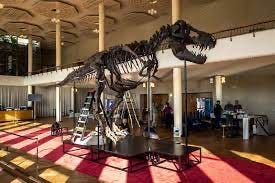
”“You?” It was Eric’s turn in the tag-team assault; obviously, my revelation had reduced the two of them to slack-jawed, repetitive snoops. “You visited an art gallery by yourself, just for something to do, when you were my age?”
“Maybe younger. I wasn’t in high school yet, I know that.”
Okay. Maybe my urge to boast wasn’t so bizarre, considering their responses and my ongoing fight for intellectual respect. What I wasn’t going to tell them was how little I remembered of those trips. To this day, I could recall only one piece of art from my gallery visits — that picture of General Wolfe dying on a battlefield (surrounded by a distraught crowd, including a concerned-looking Native American … geez, if only he’d known), painted by old What’s-his-name. But regardless of knowledge gained and knowledge lost, I could still summon how I felt when walking through the gallery’s spacious, picture-laden hallways and into its separate rooms with their separate histories, and I liked to think the trips there and to the museum were as much a part of me as any of my more foolish ventures.
The kids, though, begged to differ. Whatever esteem they held me in was not due to my refinement, and whatever smarts they’d attribute to me in the future, when I’d filled out as a person in their eyes, would lean towards the street variety, I’m sure. I’d dug too much dirt and enjoyed too many beers during their formative years for them to think otherwise.
“So. Did you frequent the opera, too?” Eric asked, sounding smug.
“Just rock opera,” I said. “But answer me this, smarty pants,” (and here I drew from my single concrete memory of the museum: that fierce-looking T. Rex skeleton). “Exactly how big was a tyrannosaurus?”
He looked straight ahead, stumped, mute; finally, Rachel stepped in: “They were about fifteen feet tall, forty feet long, and weighed around eight tons, and, contrary to popular belief, it was unlikely they could run forty miles an hour. They were too big.”
“Pretty good,” I said.
She glanced up at me. “I checked it out on the Internet after we re-watched Jurassic Park a while ago,” she said. “That scene where one of them chased a Jeep didn’t seem real to me.”
“That’s because it was computer-generated, doofus,” Eric said.
“Dad!” Rachel said, looking exasperated.
“Stop it, Eric. You know what she meant.”
Of course, who was I to pass judgment on what either one of them did or didn’t know; decades ago, I’d sat on this very sidewalk’s curb, dropping goobers between my sneakers on a warm summer day and being bamboozled by the mature Lornie Richards, a high school lad already, and his amazing predictions as to which way passing southbound cars would proceed: this one would turn left onto Clemow, that one, right onto Carling Avenue, and the next one? It would continue straight south.
How did he know?
I would have been about Rachel’s age when that event took place, and maybe the seed of embarrassment it had planted (and had stayed with me all of these years) had finally yielded its fruit: for all I expected of them, for all I saw in them, they were still damn new to this world and had much to learn.
“We’re coming up to Monkland next,” I said. “Some of the houses here might even be nicer than the ones on Clemow.”
“How do so many people afford places like these?” Eric asked, his vision cast toward the approaching the avenue.
“Good question — I don’t recall thinking about it when I was a kid,” I said. “And I still couldn’t answer you for certain. But if I had to guess, I’d say, more likely than not, that you’re looking at the homes of a lot of white-collar criminals.”
“Real criminals?” Again Eric inquired, this time sounding cranked at the possibility of gossip.
“High-profile lawyers, high-powered money lenders, high-level politicians with their blue-blood family lines…” I paused here, pondering. “So, no, in most cases not convicted, although . . ..”
“Just out of curiosity, Dad, isn’t this the kind of talk that has Mom all worried?” Rachel asked.
“Uh, no … not really.” But Rachel had nailed it; the words had flowed from my mouth as comfortably as if I were quoting absolute fact, and this was exactly the kind of talk that had Mom all worried. We had arrived at Monkland Avenue and a woman two houses down, decked out in shorts, sandals, and what looked to be one of her husband’s casual shirts, bent over a flower bed, turning soil with a hand spade. Without knowing anything about her, I’d already branded her unethical: a fund-bilking, income-tax-evading, post-breakfast-Scotch-gulping society-page subject at best, the parasitic spouse of one at worst (all the while sitting on the boards of a half-dozen charitable organizations in an effort to stave off a future eternity in hell, of course).
We continued strolling along O’Connor Street. I could read the Baymore Terrace street sign ahead, with the scent and sense of Patterson’s Creek beyond it, and First Avenue just beyond that. No banners would fly heralding my return, no throngs would line the street; odds were, I wouldn’t recognize a soul and vice versa (unless someone had just polished off a tabloid article, complete with my mug shot, over a late-breakfast coffee). Still, this was where I’d sprung from, and, regardless of how therapeutic an outcome the experience would yield, I expected my fair share of emotional highs and lows over the next little while.
The creek came into view as we approached the intersection of Baymore and O’Connor.
We stopped and stood motionless on the corner for a moment, taking in the scene below: with the rolling greenery, the winding path, the globe lights, and a lush island sitting right in the center of the creek, we were viewing an urban landscape painting.
On the far side of the creek, atop the crest on the southwest side of the ravine, sat First Avenue Public School — and here, trying to describe the setting gets tricky.
The schoolyard itself was built on landfill to keep it level with the street beyond, so, out of necessity, a concrete retaining wall stretched its width at the back; wild shrubs and a stand of trees covered the hillside beneath, hiding any hint of cement. To the east of the school, a row of prestigious homes (and what looked to be an all-glass condo of recent vintage) sat atop the ridge on the First Avenue side, running parallel to the water at spacious intervals, with their estates sloping down to the edge of creek property.
These buildings didn’t reside on First Avenue, but they didn’t not. They formed a strung-out enclave behind it, without sidewalks or street signs, snaring exclusivity, the creek view, and a far greater price tag as they faced Baymore Terrace sitting across the mini-valley. And although I’d weaseled through these properties countless times on my way down to the creek, I don’t recall noticing if they had numbers posted by their doors or any sort of identities other than the oddity of seeming to be coach houses of greater size and quality than the houses in front of them.
“You want to walk on the street or down by the water?” I asked.
The water won in a landslide so we crossed the street and took the stairs down to the footpath.
“Did you know anybody on this street?” Rachel asked, nodding towards Baymore.
“Uh, not really. I was more an ‘other side of the creek’ kind of guy. But I knew of one. Karl Eisenstein or Berenstain or something, a world-famous photographer way back when.”
“What did he photograph?” Eric asked.
“Celebrities, politicians . . . although the only one I remember is that old black and white of Churchill with a cigar stuck in his face; apparently, it spoke volumes more than what met the eye.”
And that was an adequate enough Freudian segue to bring up the one other person on the street that I was aware of — from afar, anyway — although I wasn’t going to tell the kids about her. They’d go through their own turns of unrequited love.
I suffered through this particular episode back in Grade 10 — 1972, I guess — and Val Creighton was the object of my longings. She’d lived in a big white colonial on Baymore, down a bit from where we walked now.
She also sat directly across from me in English lit, in a classroom setup described as “in the round,” for livelier literary discussions.
It sounds . . . I don’t know, lazy, to say she was a conventionally pretty girl, but that’s what she was, with long blue-black hair and big hazel eyes; every once in a while those eyes, veiled beneath lashes I could see from clear across the room, seemed to linger on me a bit longer than necessary.
Nothing but twenty-five feet of air separated our sightlines, except for those occasions when our English teacher, Mr. Carver, stomped between us, striding the floor like a third-rate Svengali, ogling all those fifteen-year-old girls lined up in a row, impressing them with his post-Woodstock Fu Manchu and next-to-useless knowledge of Pincher Martin and Catcher in the Rye while tolerating the boys’ presence just enough to avoid the allegations. . ..
But I digress.
I lived for those forty-minute classes, and while Val appeared to be out of my league, she didn’t appear to be of any particular stock, either — not cheerleader, debate club, or anything in between; she didn’t hang out with any discernible crowd (although she could have had her choice), choosing to come and go without flaunting a single one of her attributes.
And so I found myself down at the creek after school most fall days, dutifully walking our dog at the time, a Bouvier named Charley Horse, tossing balls and sticks, squeezing in my forbidden smokes while employing my ulterior motive of staring at her house from the corner of my eye as I acted Lucky Strike cool.
But as fall turned to winter, my walks with Charley became more purpose-driven: a cigarette for me, a shit for him, and amidst the wisps and streams of smoke and steam, the fading hope of catching Val peeking at me and pining for me from behind her bedroom window curtains.
Of course, I never caught her. English lit remained status quo for the rest of the year, life went on, and I managed to squeeze out a sporadic, mostly unsuccessful high school dating career the rest of the way, not once hooking up with anyone who made me feel the way she did.
Val Creighton, on the other hand, fell into a serious relationship (for Grade 11, anyway) the following year with Kenneth James. If I can recall with any accuracy, he was a gangly kid, a book-toting, downy-chinned philosopher decked out in crusty bellbottoms and tie-dyed shirts who lacked any beguiling physical qualities whatsoever, which always led me to ponder this: What if I’d read her classroom looks correctly? What if I’d taken that chance and made even a rudimentary move?
Examining paths taken and those not, I suppose, played another part in why I was here with my children, and one answer I was starting to gather from my deliberations was this: forget about the race going or not going to the swiftest; if you wanted to reach the finish line, you had to start by putting one foot forward. Every time in life I’d done that, I’d reaped some kind of reward (best example: ultimately winding up with the perfect woman, despite my shortcomings); every time I hadn’t, I’d found myself mired in a dead end (best example: fill in the multitudinous blanks).
So I walked forward along the park’s pathway now, with Eric and Rachel by my side, the three of us seeing the same things but processing different pictures entirely. As Rachel looked around, surveying her surroundings, she said, “This is soooo beautiful. At night, with those globe lights shining and the houses on top of the hill all lit up, it must seem like elves are hiding in the bushes.”
“So, was this like a hangout?” Eric asked.
“One of a handful,” I said, pulling my cigarettes from my shirt pocket, lighting one, and marveling at just how mysterious life was. Who’d have thought I’d be visiting the very bench that Stanley Austen and I had hovered around and christened our lungs beside almost thirty-five years ago — and that my thirteen-year-old son and twelve-year-old daughter would be strolling past it with me now, looking up at me, Monsieur Rôle modèle, as I sparked yet another one.
Okay, maybe not just how mysterious so much as just how fucked up life was in all its myriad ways. A lesser person might have wept; I exhaled, then said, “By the way. I hope you guys aren’t thinking about taking up smoking. It’s a dirty, filthy habit.”
“No offence, Dad,” Eric said, “but do we look stupid?”
“I’ve heard you look quite a bit like me,” I answered. “Hence my concern.”
“We’re way better educated than you were about these sorts of things,” Rachel said.
“Yeah, yeah. Each generation’s more enlightened than the last, culminating in this one — and we’ve got a hundred reality shows to document that for us now.” I paused and turned my head, taking extra care this time to blow my smoke away from them. “Just beware of the looming pressures, okay?”
With my head turned I could see back across the creek and to the west, to the stand of trees and bushes covering the schoolyard retaining wall: the very bushes, no doubt, that held the largest quantity of Rachel’s elves. That whole row seemed refined now, almost kempt, not at all the wild collection of brambles I’d remembered, but then my memory might have been marred by one of the last deeds I recall taking place in its depths, in the summer of Grade 9.
On my way home from summer school French class that day, I stepped off the 6 Holland bus one stop early as usual so I could squeeze in another of those illicit cigarettes as I walked through First Avenue’s schoolyard. And as I stopped to sit on the school’s back fire escape for a moment’s contemplation and privacy, I heard noises — strange, muted noises — and slurred speech drifting up through the yard’s chain-link fence in the distance.
I wandered over and looked down. There, Christine Kelly sat cross-legged in the dirt with her halter top pushed down onto her pasty, folded belly. A rag-filled plastic bag and a half-emptied bottle of nail polish remover, capless and dripping its remaining fluid into the twig-covered earth, lay tossed to the side. Before her, Brad Dawson and Billy Kerwin leaned like saplings in the wind as they tried to handle both their brain-crushing highs and the slope they stood upon; the dialogue floating upward was disjointed, mostly nonsensical. The one line I could discern, almost comic if it weren’t so sad, issued from Christine’s lips, and it went something like this: Holy mackerel, Brad. You got some baloney on ya.
Ah, to be a two-fisted dinker at such a tender age.
And while Brad and the boys (with, truthfully, me participating in the occasional event) often showed more edge than those darn Katzenjammer Kids swiping peach pies from windowsills, we weren’t clawing out lives of sheer survival in the back alleys of Bangkok or the slums of Rio, either. Simply put, this was where I’d lived.
Still, the memory helped reinforce what I’d stated way back, near the start of all this, when I’d first thought about Stanley and me and I’d likened this creek to Eden. Of course, I’d thought more about the Bible since my dealings with Rose, but I didn’t need that forced familiarity to already feel the Eden comparison in my bones, what with the natural beauty of the area, the forbidden-apple-and-the-snake parable (and no, by snake I don’t mean Brad), all culminating in my exile from childhood on this very glebe, this very plot of land.
Could Eric or Rachel, any time soon, find themselves in a situation like the one I’d looked down upon? Uh-uh. No way. Not soon, not ever. And did all neighborhoods wear as thin a veneer as this one? I couldn’t allow myself to believe so. But how could I know what would unfold for my kids in this world — not my world but their world? How could I be anything but terrified about their futures? They stood at the threshold of childhood’s end and were about to enter a time where … I don’t know, where “losing their innocence,” in whatever sense, seemed an inadequate description, where they were about to get some serious dirt splashed on them seemed a more appropriate analogy.
I dropped my half-finished smoke on the walking path, crushed it underfoot, and looked at my watch: 11:27 a.m.
“Okay, guys. I think it’s time to get out of here.”
“But your old house is just around the corner, isn’t it?” Eric asked.
“Yes, and you’ll see it at dinner. In the meantime, there’s still lots to do.”
Rachel scrutinized me briefly before saying, “You don’t like being here, do you, Daddy?”
“Methinks, kiddo,” I said, “that you’re imagining things.”
But what was the title of that Thomas Wolfe novel I’d paraphrased way back when? You Can’t Go Home Again? I really had no idea what he’d meant personally, but I had my own take on the statement, and at that moment, I definitely felt the urge to go look upon something from the past that wielded fewer and smaller teeth.
“So, what do you suggest?” Eric asked, sounding as impatient as ever.
“How about we head over to the museum,” I replied, “and see if they’ve still got that T. Rex in the lobby?”
Thank you for reading. Jim Kearns is approaching the end of his odyssey but I have plenty of other stories coming up.